
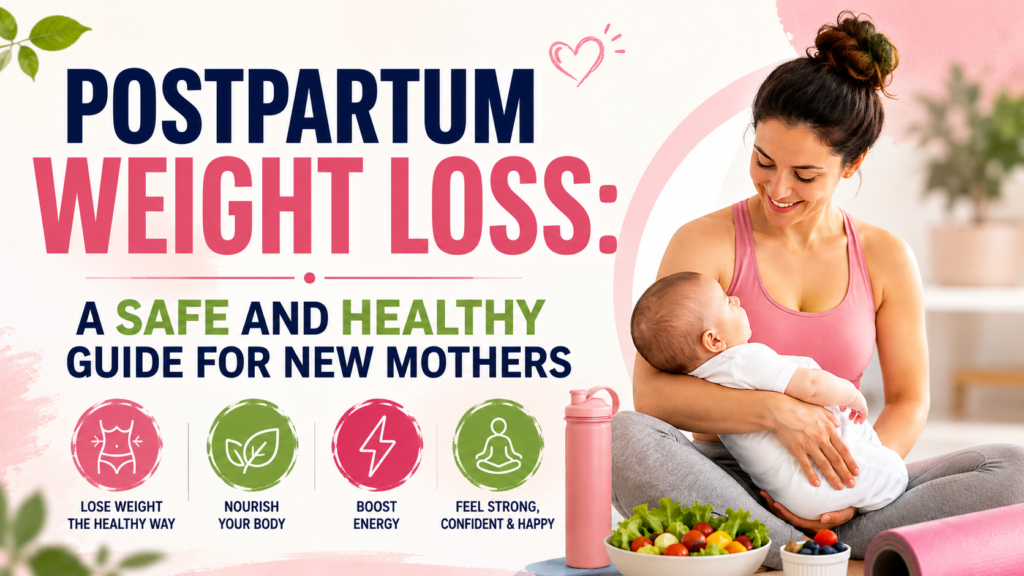
When you step into motherhood everything shifts
Your days look different your nights feel longer and your body no longer feels like the one you remember from before
It is a big change and it shows up in every part of your routine
Most new moms quietly feel a lot of pressure to drop the baby weight as fast as possible
They want to slide back into old jeans and see that familiar shape in the mirror again
But postpartum weight loss really works best when it is slow kind and grounded in reality
Postpartum Weight Loss A Safe and Healthy Guide for New Mothers is meant to walk you through what counts as normal what truly supports your health and how you can look after yourself while you care for your baby
Think of it like a friend holding your hand and guiding you step by step so you can feel strong confident and at home in your body again
Understanding Postpartum Weight Changes
During pregnancy your body gains weight for a whole list of important reasons
Part of that weight is your baby and the fluid that keeps your baby safe
Another part comes from extra blood volume and supportive tissues that help your body carry the pregnancy
Your body also stores fat on purpose to give you backup energy during pregnancy and breastfeeding
After delivery some of this weight drops quite quickly
Baby weight and fluid go down and you may notice a sudden shift in the first couple of weeks
The rest of the weight does not disappear overnight
It usually moves down slowly over the next few months and that pace is normal
Each mother is different and every body has its own rhythm
Some women notice the kilos melting away sooner while others need more time
Hormones are changing a lot in the postpartum phase and that affects how you feel your energy levels and how your metabolism works
It is absolutely normal to look in the mirror and feel that your body seems unfamiliar for a while
Letting yourself accept this period and be patient with your body is one of the kindest first steps toward healthy postpartum weight loss
Why Crash Dieting After Delivery Is Harmful
When a mother feels uneasy about her body she might start thinking about extreme diets or quick tricks
Crash dieting is when you eat very little and push your body to lose weight as fast as possible
Right after delivery this kind of approach can be risky for both you and your baby Your body is still healing from pregnancy and birth and that recovery needs steady nutrition and enough energy
If you are breastfeeding your body needs extra calories plus vitamins and minerals to make good quality milk
Very strict dieting can slow down milk production and leave you feeling drained and exhausted
Poor nutrition can show up in other ways too
You might notice hair fall dry skin mood swings or constant fatigue
Instead of fighting your body with harsh food rules it is far safer to feed yourself properly and let the weight come down gradually
This gentler path supports healing and protects your health in the long run
Safe Nutrition Guidelines For Postpartum Weight Loss
Real postpartum weight loss starts with what you put on your plate every day
You do not need fancy diet names or complicated charts
Simple balanced meals and a bit of planning can do a lot of work for you
Focus on foods that look close to how they grow in nature
Load up on vegetables fruits whole grains pulses and lean protein sources
These choices give you steady energy help you stay full for longer and bring important nutrients that help your body repair itself
They also keep digestion smoother which many new mothers appreciate
Try to shape your day around three main meals and two or three small snacks
Long gaps without eating can make you overeat later and trigger sugar cravings
Adding a good hit of protein to each meal is especially useful for postpartum weight loss because it supports muscle recovery and keeps hunger in check
Here are some easy daily meal ideas you can play with
Breakfast could be vegetable poha upma or oats paired with curd or milk
Lunch might be dal roti sabzi and salad with a little rice if you enjoy it
Snacks can stay simple like fruit yogurt roasted chana or a small handful of nuts
For dinner you might choose light options such as khichdi soup with sabzi or a basic dal and roti
Try not to lean too heavily on deep fried snacks rich sweets and sugary drinks
These foods pack in a lot of calories and offer very little nutrition
You do not have to ban them forever just keep them as once in a while treats instead of everyday habits
Water matters too
Sip enough through the day instead of waiting until you feel very thirsty
You can also add buttermilk coconut water or mild homemade soups to keep your body well hydrated
Gentle And Safe Exercise For New Mothers
Exercise after delivery needs to be soft on your body and built up slowly
Your system has just gone through pregnancy and birth and that is no small event
The right time to begin moving more depends on whether you had a normal delivery or a cesarean and on how you are healing overall
Checking with your doctor before starting any routine is always a wise step
For many new mothers short gentle walks are the easiest way to start
In the first few weeks you might simply walk around your room or through your home
As you feel stronger you can slowly increase the length of these walks
Walking helps circulation lifts your mood boosts energy and burns calories without stressing your body
Simple stretching adds another layer of support
It keeps your muscles and joints flexible and can reduce stiffness from long feeding sessions and carrying the baby
Pelvic floor exercises are especially important because they help your core and back and can ease discomfort in the pelvic region
Later on when your doctor gives you the green light you can add light strength work using your own body weight or basic resistance bands
These kinds of exercises help build lean muscle and that makes weight loss easier and posture better
You do not need hours at the gym
Even short routines of ten to fifteen minutes done regularly can bring steady results
Managing Sleep Stress And Emotional Eating
Sleep in the postpartum months is often scattered and unpredictable
Night feeds and baby care can leave you feeling like you are always running on half a battery
When you do not sleep enough your hunger and cravings often rise especially for sweets and quick comfort foods
All this can make weight loss feel like climbing a hill with a heavy bag
Try to rest whenever you find small pockets of time even if it is just a short nap
If you have a partner or family member who can share some baby duties let them step in so you can breathe for a bit
Taking breaks does not make you selfish
You are human and your body and mind need rest too
Stress is another big piece that sneaks into this phase
New motherhood brings physical changes emotional ups and downs and mental load all at once
When stress piles up you might notice you are reaching for food to calm feelings rather than actual hunger
This is what people call emotional eating
One simple way to handle this is to pause before you eat and gently ask yourself what you are feeling
Are you hungry or are you exhausted sad angry or just overwhelmed
Sometimes a few deep breaths some easy stretching a quick step outside or a chat with someone you trust can ease that urge to eat for comfort
These small steps can keep your postpartum weight loss journey more steady and less stressful
Setting Realistic Postpartum Weight Loss Goals
One of the most loving things you can do for yourself is to set goals that feel human and doable
Many mothers scroll through photos online and feel they should be slim again in record time
In real life healthy postpartum weight loss usually moves at a slow and steady pace
After the early recovery phase a commonly safe range of weight loss is around half to one kilogram in a week
Some weeks you might not see change on the scale and that is perfectly fine
You are looking for overall direction not instant perfection
Instead of only staring at the scale pay attention to other signs of progress
Notice how your clothes fit how your energy feels during the day and how your strength grows when you move or lift
Sometimes your waist or hips become smaller even when the number on the scale refuses to budge
Celebrating these quieter changes can keep you motivated and hopeful
Remember too that your body has just done something extraordinary
It has grown and brought a new life into the world
Softness scars and shifts in shape are part of that story
You are not less beautiful and not less worthy because of them
Postpartum weight loss should be about feeling healthy and comfortable not about punishing yourself
Nutrition And Weight Loss For Breastfeeding Mothers
Mothers who breastfeed often worry if losing weight will harm their milk supply
With a thoughtful approach you can slim down and still protect your milk
Breastfeeding itself uses extra calories every single day
This can naturally support gentle weight loss
To keep your supply steady you need enough nutrient dense food and enough fluids
The idea is to create only a small calorie gap through balanced food and reasonable activity
Slashing calories too hard can leave you weak and may slow down milk production
It is better to focus on nourishing meals and cutting back on empty calorie foods like sugary snacks and heavy junk
This creates a mild deficit where your body can shed fat over time without feeling under attack
If you notice that your energy is constantly very low or your baby seems less satisfied after feeds talk to your doctor or a lactation expert
You might need a few tweaks in your eating pattern or routine
Paying attention to both your body and your baby is an important part of safe postpartum weight loss
When To Seek Professional Help
There are times when even with your best efforts the weight refuses to shift and you just feel stuck
Sometimes you might also notice signs like thyroid problems anemia deep sadness or strong tiredness that does not go away
In situations like these professional support can make a big difference
A qualified dietitian can sit with your medical history your lifestyle your feeding pattern and your daily schedule and design a plan that fits your actual life rather than an ideal diagram
This is especially helpful if you are dealing with conditions like diabetes high blood pressure or polycystic ovarian syndrome along with postpartum weight gain
Working with a dietitian is not about following strict rules without question
It is more like having a calm guide who adjusts your plan as your baby grows and your routine changes
You get someone who can clear your doubts and keep you gently focused on your aims
Your doctor has an equally important role in checking your recovery blood reports and overall health
When your doctor and dietitian work together they can help you move toward healthy postpartum weight loss without putting your wellbeing at risk
Conclusion
Postpartum Weight Loss A Safe and Healthy Guide for New Mothers is at its heart about patience compassion and sensible choices
Your body has carried a pregnancy gone through birth and navigated many sleepless nights and it deserves soft care not harsh rules
Slow weight loss built on balanced food easy movement better sleep and stress management stays safer and tends to last longer than any quick shortcut
You also do not have to solve everything on your own
If you feel overwhelmed confused or simply ready for a clearer plan it may be the right time to book a consultation with a qualified dietitian
Personal guidance can help you balance recovery breastfeeding and weight loss in a way that fits your lifestyle and health needs
Reaching out for help shows strength and it can make your postpartum journey feel lighter kinder and much more joyful
Frequently Asked Questions
How soon after delivery can I focus on postpartum weight loss
In the first few weeks your main job is to heal and care for your baby
Gentle walking and simple stretching are usually enough during this time
Once your doctor says your body is ready you can slowly start adding more organized exercise and pay closer attention to your food for weight loss
Is it safe to lose weight while I am breastfeeding
Weight loss can be safe while breastfeeding if you let it happen gradually and eat a balanced diet
Breastfeeding uses extra calories and helps natural weight loss already
Just steer clear of very harsh diets and make sure you eat enough nourishing foods and drink plenty of fluids
What if I had a cesarean section
After a cesarean your body needs extra time for healing
It is important to wait for your doctors approval before you go beyond short gentle walks
You can still work on postpartum weight loss but you will need to move more slowly and focus strongly on comfort and recovery
Do I need a special postpartum diet plan
Most mothers do not need extreme or complicated diet plans
Simple home style meals rich in vegetables fruits whole grains pulses and lean proteins usually work very well
Special patterns may be needed if you have medical conditions and those should be planned together with a doctor or dietitian
Why is my weight not going down even though I am trying
There can be many reasons such as broken sleep high stress hormone changes thyroid problems or a plan that does not fit your real routine
It often helps to look honestly at your habits and check in with a health professional
Small changes in portion size meal timing or activity level can sometimes unlock progress
Can I use intermittent fasting for postpartum weight loss
Intermittent fasting is a popular idea but it may not suit the early postpartum period especially if you are breastfeeding
Long stretches without food can affect energy and milk supply
If you are curious about this method talk to your doctor and dietitian first and do not start without guidance
When should I think about consulting a dietitian
You can reach out to a dietitian any time you feel unsure about what or how much to eat or how to fit healthy habits into your new routine
It becomes even more useful if you have a lot of weight to lose or health concerns like diabetes thyroid issues or blood pressure
A dietitian can design a safe realistic plan that respects your life as a new mother and slowly moves you toward your goals.
Looking for a Personalized Diet Plan?
Consult Dr. Ritika Dua for expert nutrition guidance tailored to your health goals.
Book a ConsultationAlso Read:
Best Way to Lose Weight with PCOS A Complete Guide
Postpartum Weight Loss: A Safe and Healthy Guide for New Mothers
7 Foods Making Your Thyroid Worse (Without You Realizing It)
Pingback: Boxed vs. Real Juice: The Hidden Difference in Your Morning Glass -