
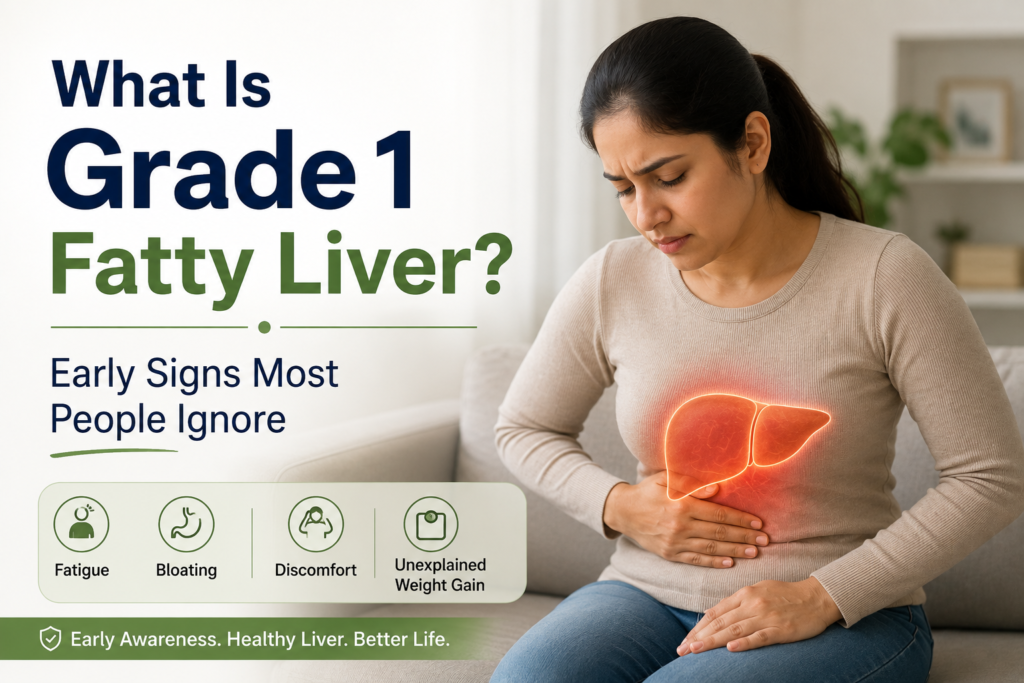
A lot of people discover they have fatty liver completely by accident.
They go for a routine health checkup, an ultrasound, or blood test, and suddenly the doctor says:
“You have Grade 1 fatty liver.”
The first reaction is usually confusion.
Some people panic immediately and think their liver is failing.
Others ignore it completely because they feel “normal.”
Both reactions are wrong.
Grade 1 fatty liver is usually the earliest stage of fatty liver disease. It is common, and in many cases it can improve with proper lifestyle changes. But ignoring it for years can create bigger health problems later.
The scary part is that many people with fatty liver have no obvious symptoms in the beginning.
That’s why it quietly gets worse over time.
What Does Grade 1 Fatty Liver Mean?
Grade 1 fatty liver means a small amount of fat has started building up inside the liver.
The liver normally contains very little fat. But when too much fat begins collecting there, doctors call it fatty liver.
Grade 1 is considered the mildest stage.
At this point, the liver usually still functions properly. The problem is that it acts like an early warning sign.
Your body is basically saying:
“Your lifestyle needs attention.”
Why Fatty Liver Happens
A lot of people think fatty liver only happens to heavy drinkers.
That’s outdated thinking.
Today, many people develop fatty liver because of:
- poor eating habits
- excess sugar intake
- obesity
- low physical activity
- insulin resistance
- diabetes
- poor sleep
- high processed food intake
In fact, many people with fatty liver do not drink alcohol at all.
Modern lifestyle is one of the biggest reasons fatty liver cases are increasing so quickly.
Common Causes of Grade 1 Fatty Liver
1. Excess Sugar Intake
This is one of the biggest contributors.
Sugary drinks, desserts, packaged snacks, and processed foods overload the body over time.
Too much sugar, especially from processed foods, can increase fat storage inside the liver.
2. Belly Fat and Weight Gain
People with excess belly fat are more likely to develop fatty liver.
This is because belly fat is closely linked with insulin resistance and metabolic problems.
And unfortunately, many people today spend most of their day sitting.
3. Lack of Physical Activity
A person can go to the gym for 45 minutes and still live an inactive lifestyle overall.
Long sitting hours matter more than people realize.
The body was not designed to stay still all day.
4. Frequent Junk Food Consumption
Processed food becomes a problem when it turns into a daily habit.
Examples:
- fast food
- chips
- bakery products
- fried snacks
- sugary drinks
- instant meals
The issue is not eating these foods once in a while.
The issue is regular overconsumption.
5. Alcohol
Alcohol can increase fat buildup in the liver, especially with regular heavy drinking.
Many people underestimate how strongly alcohol affects recovery, sleep, appetite, and liver health together.
Symptoms of Grade 1 Fatty Liver
This is where things become tricky.
Many people feel completely normal.
Others may notice symptoms like:
- fatigue
- heaviness in the stomach
- bloating
- low energy
- mild discomfort on the upper right side of the abdomen
But honestly, these symptoms are very nonspecific.
That’s why many people discover fatty liver only during scans or routine checkups.
Is Grade 1 Fatty Liver Dangerous?
Grade 1 itself is usually reversible in many cases.
But ignoring it for years is risky.
Fatty liver can slowly progress to:
- Grade 2 fatty liver
- Grade 3 fatty liver
- liver inflammation
- fibrosis
- serious liver damage
Not everyone progresses to severe disease, but lifestyle matters a lot.
The earlier someone improves habits, the better the chances of recovery.
Can Grade 1 Fatty Liver Be Reversed?
In many cases, yes.
This is the good news people should focus on.
The liver is surprisingly resilient when given proper support.
But reversal does not happen through:
- detox teas
- miracle supplements
- random internet remedies
It usually improves through consistent lifestyle changes.
And honestly, consistency matters more than perfection.
Best Foods for Fatty Liver
Simple foods usually work better than fancy “liver cleanse” products.
Helpful foods include:
- vegetables
- fruits
- oats
- dal
- eggs
- fish
- curd
- nuts in moderation
- whole grains
- lean protein
Protein and fiber help improve fullness and eating control.
Foods That Usually Make Fatty Liver Worse
Try reducing:
- sugary drinks
- excess sweets
- processed food
- fried food
- excessive alcohol
- overeating junk food
Many people underestimate how much liquid sugar they consume daily.
Soft drinks, packaged juice, and sweet coffee drinks add up quickly.
Does Weight Loss Help Fatty Liver?
Yes, even moderate weight loss can help.
You do not need extreme transformation.
Small sustainable improvements in:
- body weight
- activity level
- sleep
- food quality
can improve liver health significantly over time.
Crash dieting usually backfires because most people cannot maintain it.
Best Exercise for Fatty Liver
You do not need complicated workouts.
Simple things help:
- walking daily
- strength training
- cycling
- swimming
- regular movement
The goal is consistency, not punishment.
Even walking regularly after meals can help improve metabolism and insulin sensitivity.
Biggest Mistakes People Make
Ignoring It Completely
Many people think:
“It’s only Grade 1, so it doesn’t matter.”
That mindset is dangerous.
Early stages are actually the best time to fix the problem.
Following Random Detox Trends
The internet loves liver detox scams.
Most “fatty liver cures” online are exaggerated marketing.
Your liver already detoxifies your body naturally.
It needs better habits, not expensive miracle drinks.
Expecting Fast Results
Fatty liver develops slowly.
Improvement also takes time.
People often quit because they expect major changes within two weeks.
Final Thoughts
Grade 1 fatty liver is not something to panic about, but it is definitely something to take seriously.
Think of it as an early warning sign instead of permanent damage.
Your body is giving you a chance to correct things before they become more complicated later.
The good news is that small changes done consistently can genuinely improve liver health:
- better food choices
- more movement
- less processed food
- proper sleep
- weight management
- reduced alcohol intake
Most people do not need extreme diets.
They need realistic habits they can actually maintain long term.
Also Read:
7 Foods Making Your Thyroid Worse (Without You Realizing It)
How to Lose Belly Fat Without Going to the Gym
Best Fruits for PCOS Weight Loss
Vegetarian Diet for PCOS Weight Loss – Dt. Ritika Dua (Complete Guide for Women)
Thyroid Diet Plan for Working Women: Eat Right, Lose Weight Naturally