
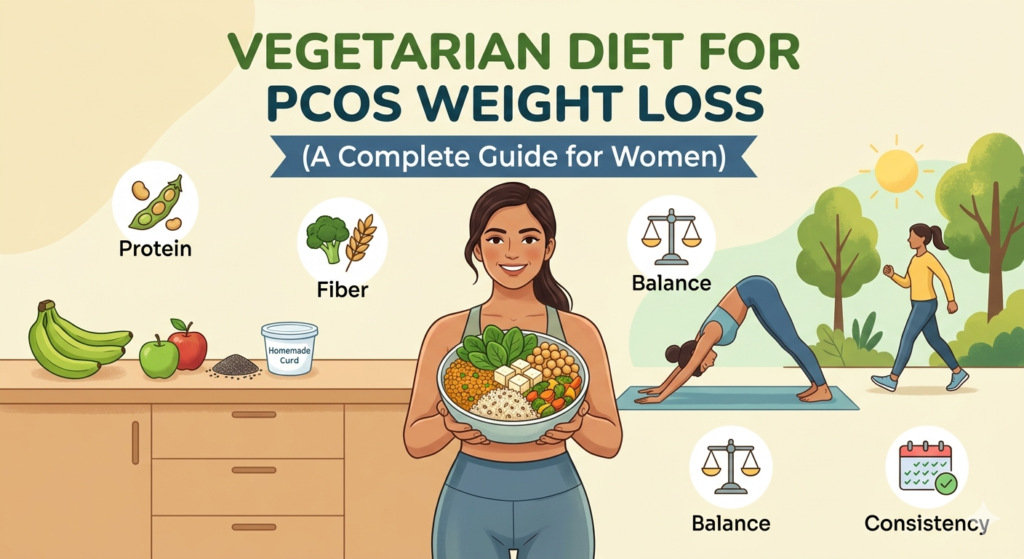
Vegetarian Diet for PCOS Weight Loss (Complete Guide for Women)
Introduction
The treatment of PCOS is not only about prescribed medications but also mostly about the way you live and eat your daily meals. Diet planning may become confusing to many women, particularly the ones who are vegetarians. The question you may ask is whether you are consuming adequate nutrients or whether your eating habits are not causing weight reduction to be sluggish.
It is also popularly known that protein is largely present in non-vegetarian food, something that leaves most vegetarian women with little to no choice. The thing is that balanced vegetarian diet could also be helpful to handle PCOS and lose weight.
The trick is that you should know what your body requires and make clever decisions on what to eat. You do not have to eat costly and complex food. Home-cooked vegetarian foods are also simple and when a good balance is maintained, they are likely to improve your metabolism, decrease cravings, and maintain hormonal balance.
It guides you, and you will get to learn:
- The problem in PCOS weight loss among vegetarians.
- Why a vegetarian diet actually will work in your favor.
- The vitamins your body actually deserves.
- Handy food options and food ideas.
At the end, you will have a perfect style and realistic approach to which you can adhere in your day-to-day life.
Challenges Vegetarians Face with PCOS
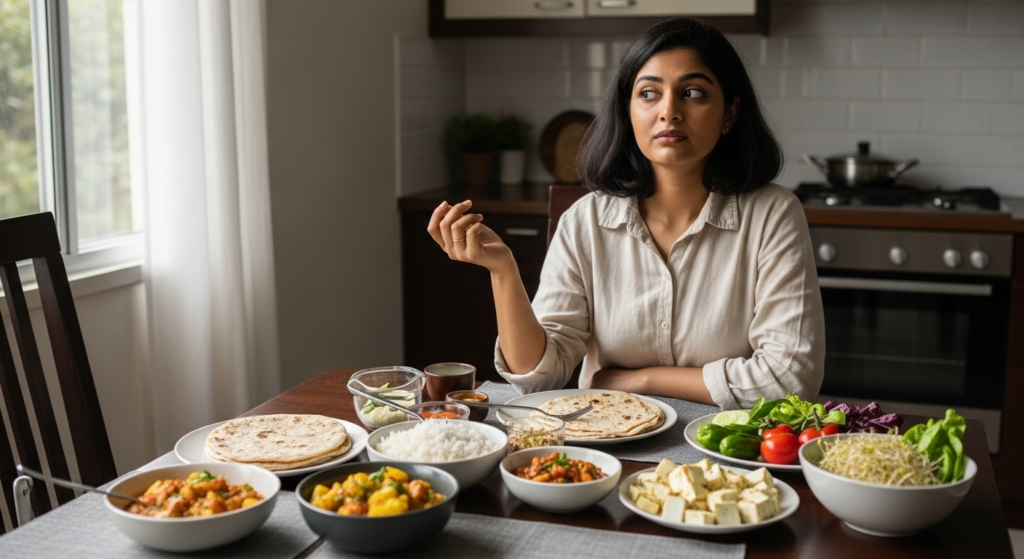
A vegetarian diet has numerous advantages but there are also few challenges encountered as well, particularly when addressing PCOS.
1. Not Enough Protein
Low level of protein intake is one of the largest problems. Most vegetarian dishes are carb based i.e. roti and rice and have very little protein.
This can lead to:
- Frequent hunger
- Increased cravings
- Difficulty losing weight
Protein is significant in ensuring that you remain full and fills muscles, which are relevant in fat loss.
2. Over-Reliance on Carbohydrates
Most Indian families have a heavy meal consisting of carbohydrates:
- Roti
- Rice
- Potatoes
Although these food products are not considered unhealthy, the consumption of these products in large quantities without balancing the protein and fiber can lead to spikes in blood sugar. This is particularly dangerous in PCOS, in which the insulin resistance is already established.
3. Constant Snacking
Since food cannot always be balanced, then after eating you may develop a feeling of hunger. This usually causes you to be caught up snacking a lot thereby adding more calories to you unknowingly.
4. Nutritional Deficiencies
There are vegetarian diets which can be deficient in:
- Iron
- Vitamin B12
- Omega-3 fats
The presence of these nutrients in also reduced amounts may result in fatigue, loss of energy and reduced metabolism.
These are actual challenges, which can be addressed through improved planning and awareness.
Why Vegetarian Diet Can Work for PCOS
These complications notwithstanding, a vegan diet can prove quite useful in the treatment of PCOS in the event that it is performed properly.
Naturally High in Fiber.
The diets of vegetarianism are full of plants such as vegetables, fruits, and whole grains. These contain a high amount of fiber which assists:
- Control blood sugar
- Improve digestion
- Reduce cravings
Reduced Unhealthy Fats.
Since vegetarian diets are usually lower in saturated fat, the meals tend to be more heart healthy and beneficial in controlling weight than most non-vegetarian diets.
Rich in Antioxidants
All plant-based foods contain antioxidants which are useful in reducing swelling. As PCOS is also connected with chronic inflammation, it is a substantial benefit.
Longer-term easier to maintain.
Vegetarian foods become easy to adhere to since in Indian families they are already accustomed to plant foods.
Being mindful in your selections and being a vegetarian is not only the most important thing to do, but to also be balanced.
Essential Nutrients Needed
To make your vegetarian diet effective for PCOS, focus on these important nutrients:
Protein
Protein is necessary to burn off weight and maintain good hormones.
Why it matters:
- Gives you longer to keep you full.
- Reduces unnecessary snacking
- Supports muscle health
Vegetarian sources:
- Panner
- Curd (HIDA)
- Lentils (dal)
- Chickpeas (China)
- Kidney beans (rajma)
- Soy products and Tofu.
See the need to have protein in all the meals.
Fiber
Fiber makes the digestion process slow and maintains the blood sugar levels.
Sources:
- Green vegetables
- Such fruits as guava and apple.
- Whole grains
Iron
Iron is important to maintain the energy levels.
Sources:
- Spinach
- Beetroot
- Lentils
People can eat jaggery (in small portions).
Healthy Fats
The fats which we consider to be healthy are important in the performance of hormones.
Sources:
- Almonds
- Walnuts
- Flax seeds
- Chia seeds
- Minor quantity of desi ghee.
Our balanced meal must have protein, fiber and healthy fats.
Best Vegetarian Foods for PCOS Weight Loss
The following are foods that would be good for managing PCOS:
Vegetables
Your meals should include vegetables in a great percentage.
Best options:
- Spinach (palat)
- Bottle gourd (lauri)
- Bitter gourd (Karela)
- Cauliflower
- Broccoli
They contain small amounts of calories and a significant amount of nutrients.
Whole Grains
Select hard carbohydrates rather than refined carbohydrates.
Good options:
- Oats
- Brown rice
- Whole wheat
- Mil lets (bajra, jowar)
These are consistent in their energy and do not give rise to surges of sugar.
Protein Sources
- Paneer
- Tofu
- Dal
- Sprouts
These assist in the elimination of hunger and help in losing weight.
Nuts & Seeds
- Almonds
- Walnuts
- Flax seeds
- Chia seeds
Healthy snacking.
Fruits
- Apple
- Guava
- Papaya
- Berries
Hint: consume fruits sparingly and take whole ones.
Sample One-Day Meal Plan
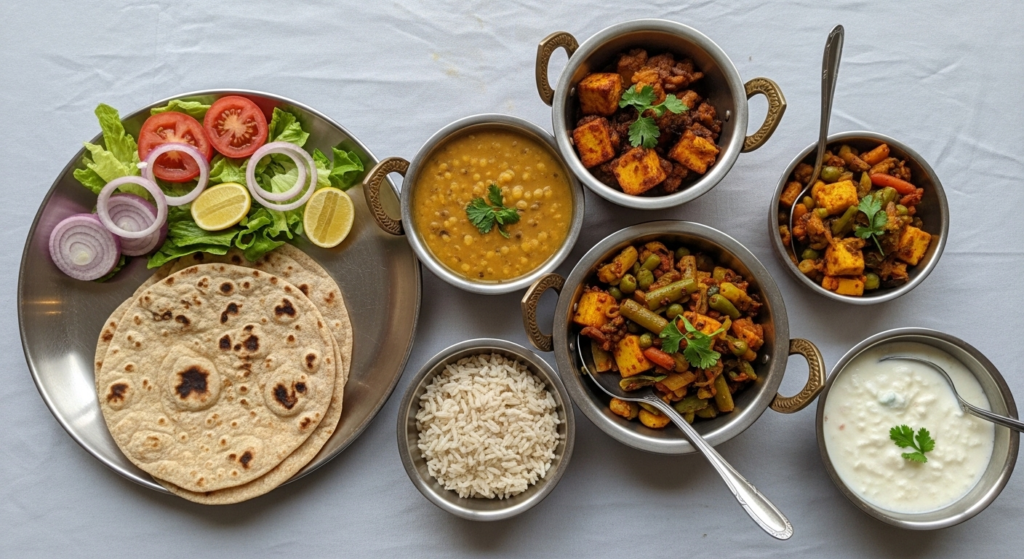
A basic and simple meal plan of vegetarianism is as follows:
Morning (Empty Stomach)
Hot water and moist almonds.
Breakfast
Curd Salad oats made out of vegetables.
OR
besan chilla with chutney
Mid-Morning
An apple (or guava) fruit.
Lunch
2 roti + dal + sabzi + salad.
Evening Snack
Baked sprouts or chana.
Dinner
Panner bhurji, which is a dish made of vegetables.
OR
Soup containing vegetables with tofu.
Have a balance and simple and regular meals.
Foods to Avoid
There are foods that may exacerbate the PCOS symptoms:
Refined Foods
- White bread
- Maida items
Sugary Foods
- Sweets
- Soft drinks
- Packaged juices
Fried Foods
- Fast food
- Chips
- Deep-fried snacks
- Excess Caffeine
Excessive tea or coffee has an influence on hormones.
A restriction of these foods can help you.
Practical Weight Loss Tips
It is not just what you eat that is important, but the way you live.
Eat Regularly
Avoid skipping meals. Eat every 3–4 hours.
Focus on Protein
Ensure that there is some protein in each diet.
Stay Active
Include:
- Walking
- Yoga
- Light exercise
Stay Hydrated
Take sufficient water during the day.
Sleep Properly
Sleep deprivation may impede the process of weight loss.
Be Consistent
It is so much more important to be consistent than to be perfect.
FAQs
Do vegetarians become weight-loss—PCS-wise?
It is true and does not mean that a balanced vegetarian diet cannot help in weight loss.
What can I do to consume protein?
Dal, sprouts, pander, and tofu should be part of it.
Is rice allowed?
Yes, though in moderate amounts. I prefer brown rice.
Am I in need of supplements?
Just in case of a deficiency — see a professional.
What is the duration of time in which results can be seen?
Consistently, it would be possible to notice results after 4–8 weeks.
Conclusion:
A vegetarian diet may prove a potent means of coping with PCOS and losing weight when thought out appropriately. It is not necessary to go and pursue extreme diets and stop eating your favorite foods. Rather, look at balance: adding sufficient protein, selecting healthier carbs and making a daily routine.
Even minor modifications in your everyday eating will have significant outcomes in the end. One just has to be patient and consistent.
Not seeing any results since it seems like you can do nothing about planning your meals? A more specific diet plan can make you make progress with peace and certainty.