
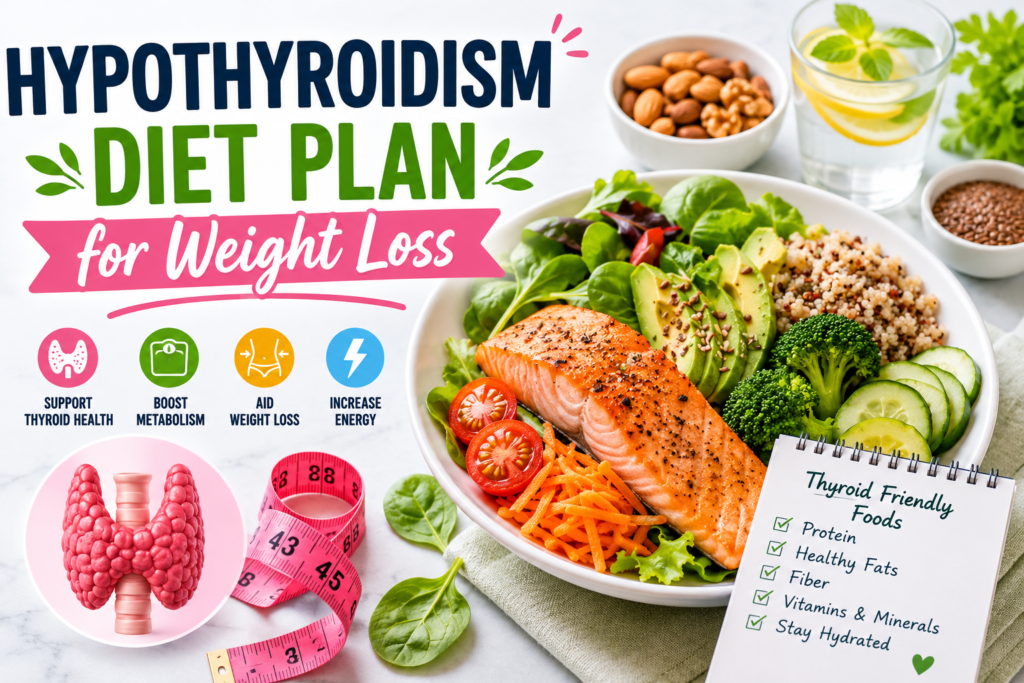
One of the most frustrating things about hypothyroidism is that people around you often think you are just being lazy or careless with food.
But many thyroid patients are genuinely trying.
They reduce sugar, skip snacks, go for walks, even start gym workouts, yet the scale barely moves. After some time, most people get mentally exhausted and stop trusting their own body.
I’ve seen this happen especially with women who are doing everything they can but still struggling with tiredness, bloating, cravings, and stubborn weight gain.
The problem is that thyroid-related weight gain is not only about calories. Sleep, stress, food quality, muscle mass, hormones, digestion, and consistency all matter.
The good part is that small practical changes usually work better than extreme diets.
You do not need detox drinks, fancy imported foods, or starvation plans.
You need a routine your body can actually handle for months, not just seven days.
In this guide, you’ll learn:
- What hypothyroidism really is
- Why losing weight becomes difficult
- Best foods for thyroid health
- Foods you should limit
- Indian meal ideas for thyroid patients
- A simple 7-day thyroid diet plan
- Common mistakes people make
- Practical ways to support your metabolism naturally
Let’s start from the basics.
What Is Hypothyroidism?
Hypothyroidism simply means the thyroid gland is working slower than normal.
The thyroid controls metabolism, energy production, temperature regulation, and several important hormonal functions in the body.
When thyroid hormone levels drop, many body processes slow down too.
That is why people often feel:
- mentally tired
- physically slow
- hungry more often
- less active during the day
- more likely to gain weight
Many people think thyroid automatically causes massive weight gain overnight.
That is not exactly true.
Usually, it creates a combination of low energy, slower metabolism, poor recovery, cravings, water retention, and reduced activity. Over time, these things start affecting body weight and overall health.
Signs Your Thyroid May Be Slowing Down
Symptoms can develop slowly, which is why many people ignore them in the beginning.
Some common signs include:
- Sudden or gradual weight gain
- Constant fatigue
- Hair fall or thinning hair
- Dry skin
- Brain fog
- Slow digestion or constipation
- Mood swings
- Feeling cold often
- Irregular periods
- Low stamina
- Puffiness on the face
- Difficulty losing belly fat
Not every person experiences the same symptoms.
Some people mainly struggle with fatigue, while others notice weight gain and cravings first.
Why Weight Loss Becomes Difficult in Thyroid
One of the biggest complaints among thyroid patients is:
“I barely eat, but my weight still increases.”
This happens because hypothyroidism slows down your metabolism.
Your body starts burning fewer calories at rest. Energy levels drop, making workouts harder. Cravings increase, especially for sugary or comfort foods.
Many people also experience:
- Poor sleep
- Stress eating
- Water retention
- Low muscle mass
- Reduced physical activity
On top of that, crash diets make things even worse.
Skipping meals or eating extremely low calories may slow metabolism further and increase fatigue.
That’s why a balanced and sustainable thyroid diet is more effective than extreme dieting.
Best Diet for Hypothyroidism Weight Loss
A thyroid-friendly diet should focus on:
- High protein
- Fiber-rich foods
- Anti-inflammatory foods
- Balanced meals
- Stable blood sugar
You do not need fancy imported foods or expensive supplements.
Simple Indian foods can work very well when planned properly.
Foods to Eat for Thyroid Health
Here are some foods that support better energy and weight management.
1. Protein-Rich Foods
Protein helps improve fullness, supports muscle mass, and keeps metabolism healthier.
Good options include:
- Eggs
- Paneer
- Greek yogurt
- Chicken
- Fish
- Dal
- Tofu
- Sprouts
- Milk
Try including protein in every meal.
2. Fiber-Rich Foods
Fiber supports digestion and helps control cravings.
Good options include:
- Oats
- Vegetables
- Fruits
- Chia seeds
- Whole grains
- Salad
- Beans
Fiber also helps people who struggle with constipation due to hypothyroidism.
3. Healthy Fats
Healthy fats help improve satisfaction and support hormones.
Examples:
- Nuts
- Seeds
- Peanut butter
- Olive oil
- Ghee in moderation
- Avocado
4. Selenium and Zinc Foods
These nutrients support thyroid function.
Good sources include:
- Eggs
- Fish
- Pumpkin seeds
- Nuts
- Lentils
- Dairy products
5. Anti-Inflammatory Foods
Many thyroid patients feel better when they reduce inflammation in the body.
Helpful foods include:
- Turmeric
- Ginger
- Berries
- Green vegetables
- Tomatoes
- Green tea
Foods to Limit in Hypothyroidism
You do not need to fear food.
But some eating habits can worsen fatigue, weight gain, and cravings.
Try limiting:
- Sugary drinks
- Excess sweets
- Fried foods
- Ultra-processed snacks
- Frequent junk food
- Excess alcohol
- Constant snacking
Many people think avoiding all carbs is necessary.
That’s not true.
The problem is usually poor food quality and overeating processed foods, not simple home-cooked carbs like rice or roti.
Best Indian Breakfast Ideas for Thyroid Patients
Breakfast matters because it affects energy and cravings throughout the day.
Some good breakfast ideas include:
- Paneer chilla with curd
- Oats with nuts and seeds
- Eggs with toast
- Poha with peanuts and boiled eggs
- Vegetable upma with yogurt
- Sprouts salad
- Besan chilla
Avoid starting your day with only tea and biscuits.
That usually leads to cravings and low energy later.
Healthy Lunch Ideas
Lunch should be balanced and satisfying.
Simple options:
- Roti with dal, sabzi, and salad
- Rice with rajma and vegetables
- Grilled chicken with rice and vegetables
- Paneer with roti and curd
- Khichdi with salad and yogurt
A balanced lunch helps maintain energy and reduces overeating at night.
Healthy Dinner Ideas
Dinner should be lighter but still filling.
Good options:
- Soup with paneer or chicken
- Dal with vegetables
- Stir-fried vegetables with tofu
- Grilled fish with salad
- Moong chilla with curd
Avoid eating very late at night regularly.
Simple 7-Day Thyroid-Friendly Meal Plan
Day 1
Breakfast: Oats with nuts
Lunch: Roti, dal, sabzi, salad
Dinner: Paneer stir-fry with vegetables
Day 2
Breakfast: Eggs and toast
Lunch: Rice with rajma and curd
Dinner: Soup with grilled chicken
Day 3
Breakfast: Poha with peanuts
Lunch: Paneer roti and salad
Dinner: Dal with vegetables
Day 4
Breakfast: Besan chilla with curd
Lunch: Brown rice with chicken curry
Dinner: Vegetable soup and sprouts
Day 5
Breakfast: Greek yogurt with fruits
Lunch: Khichdi with salad
Dinner: Fish with vegetables
Day 6
Breakfast: Paneer sandwich
Lunch: Dal rice and sabzi
Dinner: Moong chilla and curd
Day 7
Breakfast: Vegetable upma
Lunch: Roti with paneer bhurji
Dinner: Light soup and salad
This is only a general example.
Every person’s calorie needs, activity level, medical history, and goals are different.
Best Exercise for Thyroid Patients
Exercise helps improve metabolism, mood, and energy.
But many thyroid patients make the mistake of doing too much cardio too quickly.
That often leads to burnout and inconsistency.
A smarter approach is:
- Daily walking
- Strength training 3–4 times weekly
- Light cardio
- Stretching
- Better sleep routine
Building muscle is especially important because muscle helps the body burn more calories.
Even simple activities done consistently work better than extreme workouts followed by long breaks.
Common Mistakes Thyroid Patients Make
1. Following Crash Diets
Eating too little can increase fatigue and make the diet difficult to maintain.
2. Depending Only on Medication
Medication helps, but lifestyle still matters.
Food quality, sleep, stress, and movement all affect results.
3. Ignoring Protein
Low-protein diets often increase cravings and muscle loss.
4. Lack of Sleep
Poor sleep affects hunger hormones and energy.
5. Expecting Quick Results
Thyroid-related weight loss is usually slower.
The goal should be consistency, not shortcuts.
Can Hypothyroidism Be Managed Naturally?
A healthy lifestyle can improve energy, support metabolism, and help manage symptoms.
However, some people still require thyroid medication.
Do not stop prescribed medicine without medical advice.
Natural support should work alongside proper medical care, not replace it.
The best results usually come from combining:
- Proper nutrition
- Good sleep
- Stress management
- Regular exercise
- Consistency
When Should You Consult a Dietitian?
You may benefit from professional guidance if:
- Your weight keeps increasing
- You feel tired constantly
- You struggle with cravings
- You feel confused about what to eat
- You have thyroid along with PCOS or insulin resistance
- You keep starting and stopping diets
A personalized plan is often more effective than random internet advice.
Frequently Asked Questions
Can thyroid patients eat rice?
Yes. Portion size and overall diet quality matter more than completely avoiding rice.
Is banana good for thyroid?
Bananas can be included as part of a balanced diet.
Can hypothyroidism cause belly fat?
Yes. Slow metabolism and hormonal changes may increase fat storage.
Which exercise is best for thyroid patients?
Walking and strength training are usually very effective.
Can thyroid patients lose weight?
Yes, but consistency is important. Sustainable habits work better than extreme diets.
Final Thoughts
There is a lot of confusing information online about thyroid diets.
Some people say stop eating carbs completely.
Others blame gluten for everything.
Some recommend expensive supplements without understanding your actual lifestyle.
Most people do not need extreme restrictions.
What usually helps more is:
- eating enough protein
- improving sleep
- moving daily
- reducing processed food
- managing stress better
- staying consistent for months
That may sound simple, but simple habits done consistently are what actually create long-term results.
If your thyroid symptoms are affecting your energy, confidence, eating habits, or weight, getting proper guidance can make the process much easier.
A realistic plan that fits your routine will always work better than a perfect diet you cannot follow.
Looking for a Personalized Diet Plan?
Consult Dr. Ritika Dua for expert nutrition guidance tailored to your health goals.
Book a Consultation